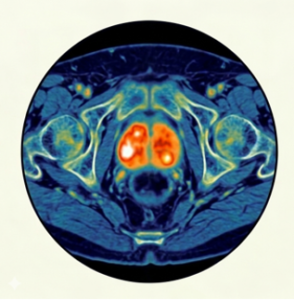
Cu-64, Ga-68, and F-18 radioisotopes are used in majority of the targeted PET radiotracers, and each offers trade-offs between image resolution, logistical convenience, cost and diagnostic versatility. The table below compares few important imaging parameters of these radiotracers.
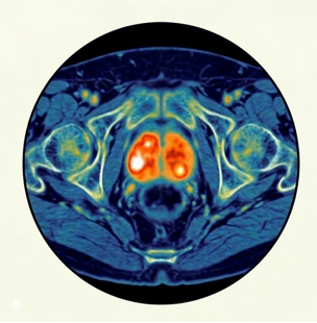
Table 1: Comparison of imaging parameters of Cu-64, Ga-68 and F-18 radiotracers
| Parameter | Copper-64 | Gallium-68 | Fluorine-18 |
| Half-life | 12.7 hours | 68 minutes | 109.7 minutes |
| Max. Positron Energy | 653 keV | 1900 keV | 635 keV |
| Average Positron Energy | 278 keV | 830 keV | 250 keV |
| ~ Mean Positron Range | 0.6 – 0.7 mm | 3.5 – 3.6 mm | 0.6 mm |
| ~ Positron Yield | 17.5% | 89% | 97% |
| Manufacture | Cyclotron | Generator | Cyclotron |
The parameters listed in the above table are discussed below for selecting a PET radiotracer based on the imaging requirements.
Half-Life: The 12.7-hour half-life of Cu-64, considerably longer than the other two, allows for regional distribution from a central hub and could provide convenience of imaging up to 48 hours; due to longer half-life, far fewer PMFs are required relative to F-18.
Positron Energy and range: Ga-68 emits about three times higher energy positrons relative to F-18 and Cu-64 positrons, and travel farthest in tumor tissue before annihilation. The distance travelled influences image resolution; the shorter travel range of F-18 and Cu-64 positrons result in sharper images whereas in theory Ga-68 may provide a lower resolution image and may limit the detection of very small lesions.
In practice, these qualitative differences may or may not be tolerable depending on imaging requirements for determining clinical decisions.
Positron Yield: With a 97% yield, nearly every F-18 decay produces a signal for the image, allowing for faster scans and high image quality. Cu-64’s positron yield is about 5 times lower than F-18; if it is only used as a tracer,onger scan times or higher dose would be required to achieve a comparable image. In addition, ~82% of its decay doesn’t contribute to the image and adds to patient’s radiation dose. However if Cu-64 is used as a theranostic, this may not be a concern and as the tracer clears from healthy blood and organs while staying “locked” in the tumor, the Tumor-to-Background ratio increases at later time points , making Cu-64 tracer useful to monitor progress over a longer time period, e.g. 48 hours, relative to the other two radiotracers.
Production Method: The Ga-68 is generator produced and allows hospitals to produce doses on-demand conveniently, but typically generators are relatively expensive. F-18 and Cu-64 are produced in cyclotrons and transported to diagnostic centers. F-18 tracers are typically manufactured in big quantities in regional cyclotrons, and starting material (H2O18) is relatively cheaper than Ni-64 required in the Cu-64 manufacture.
The ultimate choice between the selection of radioisotope for a radiotracer is based on the required image resolution, logistics and cost.