The U.S. Food and Drug Administration approved Rasonque (daraxonrasib) on Wednesday, August 26, 2026. The decision came 6.5 months in advance of the PDUFA date and marks a historic milestone as the first broad-spectrum RAS (“Pan-RAS”) inhibitor approved to fight metastatic pancreatic cancer for patients with failed current IV chemotherapy treatment standard.
In the Phase 3 RASolute 302 clinical trial, daraxonrasib demonstrated doubling the median OS to 13.2 months compared to 6.7 months for the current standard.
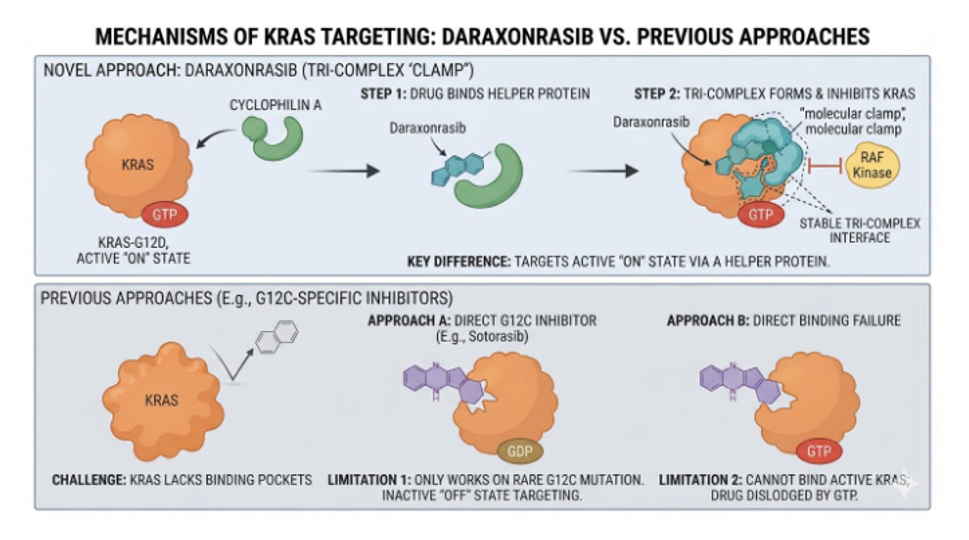
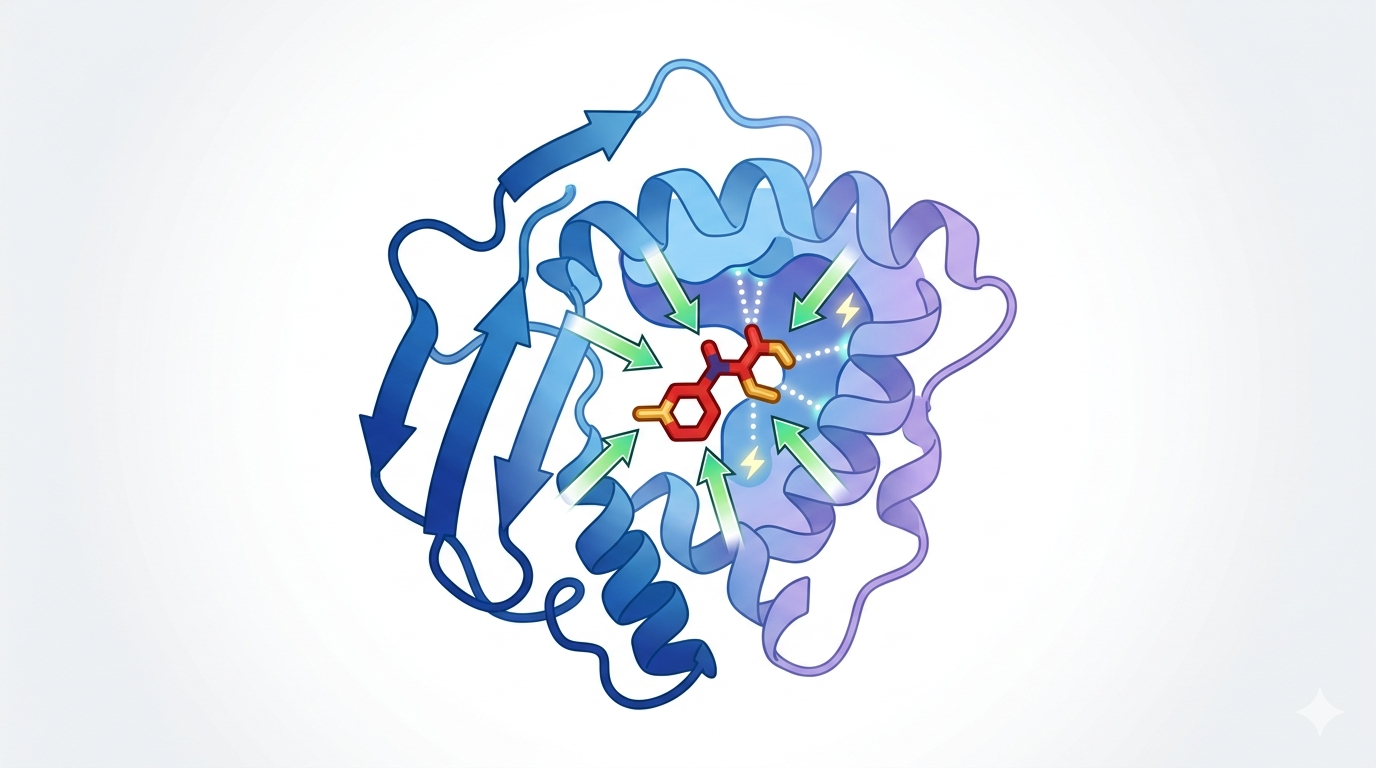
The effectiveness of this therapy lies in medication’s unique ability to bind to mutated “active” RAS proteins, the “Greasy Ball”. The RAS proteins like KRAS, lack the typical niches drugs bind to, therefore have resulted in poor binding and failed attempts to tackle the spread of pancreatic cancer effectively. The drug binds to active RAS proteins (ON proteins) vs. binding to “OFF” proteins with earlier approaches. Due to its mechanistic modality, daraxonrasib is able to bind to multiple mutated active RAS proteins, adding to its broader scope and effectiveness. The novel binding strategy employs binding of the drug to an intracellular “helper” protein first, which then facilitates the binding to active RAS proteins resulting in a “tri-complex’. The schematic below illustrates formation of a tri-complex with KRAS protein and schematic of the current treatment standard.
The novelty of this approach lies in the identification of the helper protein that facilitates binding of the drug molecule to multiple mutated RAS proteins in active state to control the spread of cancer.